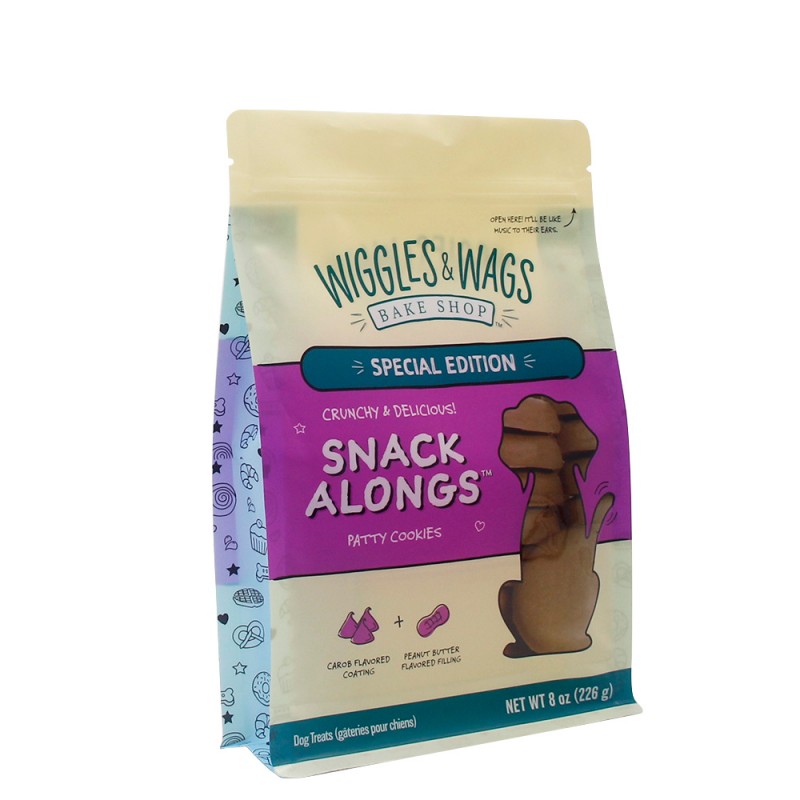
Quad‑seal pouches generate multi‑layer film overlap at four corner junctions, a unique weak‑point absent from ordinary three‑side‑seal pouches. Static visual inspection of empty mock‑up bags shows clean sealed edges. Yet during high‑speed filling, granule impact, bag inflation and pallet stacking exert compound stress on these corner intersections. Minor incomplete bonding creates invisible micro‑channels. Oxygen and moisture slowly penetrate through these tiny pathways, degrading fat‑rich pet‑food content even without obvious macroscopic bag rupture. Huadong Package runs cyclic burst‑and‑compression lab tests focused on corner intersect zones for each new pet‑food‑grade pouch project. Acceptance thresholds rule out latent micro‑channel defects before mass‑printing and converting, lowering post‑fill spoilage risk for fat‑containing dry pet‑food formulations.
Many dry pet‑food formulas contain hard bone‑chip fragments, mineral pellets and angular extruded kibble edges. When pouches undergo vibration during filling and ocean freight transport, these sharp‑edged granules continuously rub against inner barrier‑film layers. Mock‑up bags are handled empty and never experience this internal abrasive friction. Generic film structures that pass empty‑bag drop‑tests can develop pinhole punctures after filled‑bag cyclic‑vibration exposure. Huadong Package selects laminate constructions with enhanced inner‑puncture‑resistant layers matched to customer‑provided feed‑sample characteristics. Simulated granule‑vibration aging screening identifies vulnerable laminate combinations at pre‑production phase, avoiding in‑transit pinhole‑induced freshness‑loss incidents.
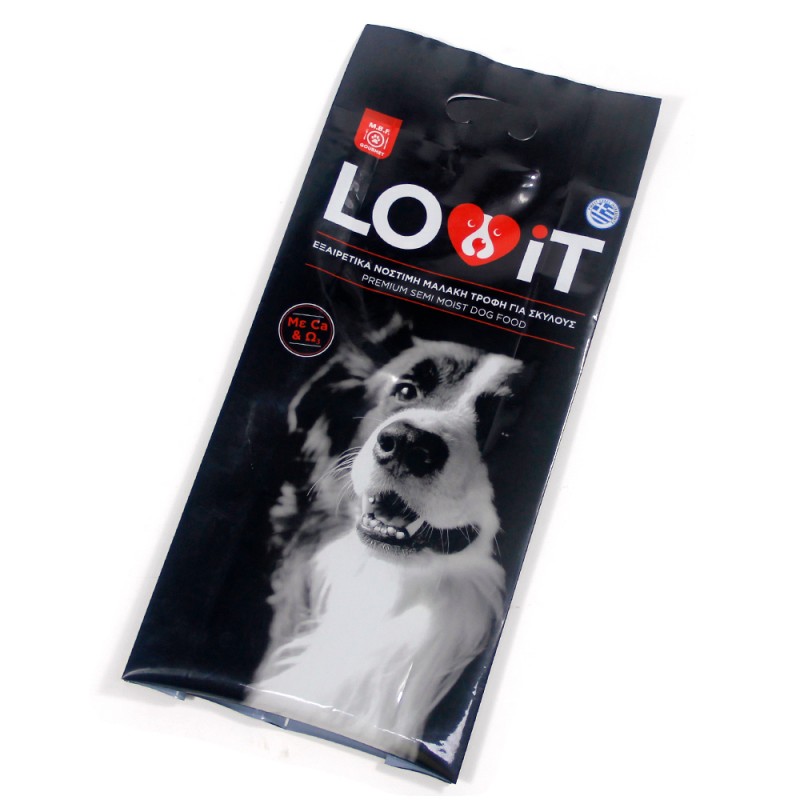
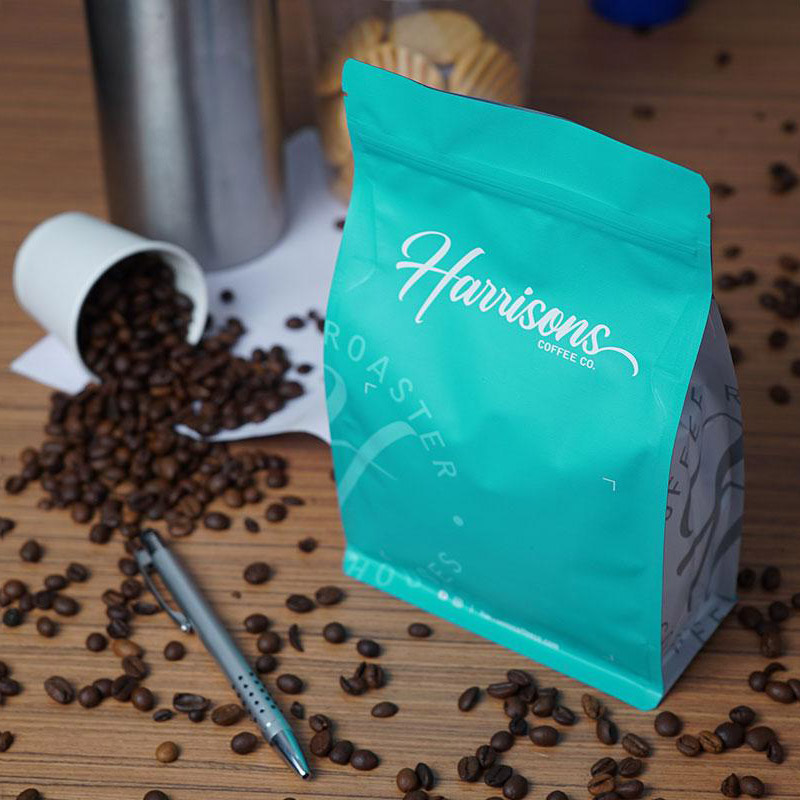
One key commercial advantage of quad‑seal format lies in its upright box‑like shelf‑presence. However, improper base‑gusset fold setting or mismatched film stiffness creates poor fold‑memory performance. After hot‑container shipping and cold‑warehouse storage cycles, residual internal stress relaxes. Even correctly filled pouches gradually slump and tilt on retail shelves. This degrades unified brand visual presentation across multi‑SKU retail assortments, even though sealing and barrier‑function remain technically intact. Huadong Package tunes gusset crease parameters paired with selected laminate stiffness. Accelerated thermal‑cycling simulation verifies long‑term upright‑stand performance, maintaining consistent shelf‑facing aesthetics for supermarket‑distributed pet‑food product lines.
Mock‑up samples are manually assembled; real‑world high‑speed filling‑lines run continuous automated heat‑seal cycles. Mis‑matched thickness transition between slider‑zipper profile and upper seal‑web creates thickness‑step irregularities. Under fast VFFS machine operation, these geometry‑steps produce inconsistent heat‑transfer, generating intermittent bad‑seal batches and occasional machine‑jamming events. Most pouch suppliers only test standalone zipper function, ignoring zipper‑to‑main‑seal transition‑zone mechanical‑thermal compatibility. Huadong Package reviews zipper profile geometry together with co‑packer filling‑machine parameters during RFQ stage. Transition‑zone dimensional tuning reduces filling‑line unplanned downtime for high‑volume pet‑food‑packaging production campaigns.
Pet‑food falls under food‑contact material regulatory frameworks in major export markets including EU 1935/2004 and EU 10/2011 rules. Generic one‑time sample certificates cannot satisfy serial‑production‑batch audit demands. Composite multi‑layer laminates, printing‑ink and adhesive formulations must undergo migration‑relevant evaluation. Without lot‑specific English‑language declaration dossiers, finished pet‑food shipments risk customs‑hold‑up and retail‑chain supplier‑audit elimination. Huadong Package executes incoming‑material screening for every production lot, compiling complete multi‑layer‑component compliance records. These documents directly support pet‑feed OEM customers for cross‑border market‑access procedures without extra third‑party testing expense.
Empty‑bag drop‑tests deliver limited real‑world reference. Actual damage modes manifest only after pouches are filled with dense pet‑feed kibble. Weight concentration shifts impact‑force toward seal corners and gusset folds during pallet handling, container trans‑loading and last‑mile delivery. Huadong Package performs pre‑shipment drop‑simulation using customer‑representative filled‑bag weight specifications, replicating multi‑step logistics‑impact scenarios. Potential seal‑tear failure‑points get corrected ahead of mass‑delivery, cutting finished‑goods‑reject losses for pet‑food brands relying on multi‑leg ocean‑land distribution networks.